
Unlike Home

I never imagined the end times would look so beautiful.
Snow sprawled across the hills. It clung to the trees and perched upon the branches. It gathered steadily and silently. White morning light peered through an opening in the curtains and spilled across the bedspread. I knew as I woke that something in the air was different.
I’d never seen the earth like this. Never in all these years on this property. I walked into it, barefoot in my pyjamas, entranced by the snow, surprised by the blistering cold.
The dogs sniffed at it, unsure like me. A toe off the front step’s edge to test it was real. Still, the snow continued to fall. The morning was silent.
Inside, fumbling with socks and boots, my hands shook. A child on Christmas morning. I turned, bright-eyed, eight years old, in search of Mum and Dad, or Joey, still eleven, still eager to play. The kitchen was still and dark. I’d call him later.
Then, clad in wool and scarves and rubber boots, I leapt off the front veranda and into the snow. We made snow angels, me and the dogs, and discovered how wet snow is. Down the hill, at the base of the property, the river continued past, slow but uninterrupted. It was a relief to see it flowing onward, proof that something remained as usual.
We ran along the river, rolled down the hills, shivered in unwavering delight. I rolled snowballs, then rolled more, continuing long after my fingers went numb. Stacking them atop each other, little snowmen appeared one by one, with twiggy arms and crooked smiles.
By noon, the ice figures were dotted around the garden, far outnumbering the dogs and me, each one dressed in something from my own body. I shivered under the damp, grey light of the early afternoon.
I looked up at the swirling, everlasting drift of snow. Gran used to shout at Joey and I from the kitchen window, to get inside and out of the rain or the dust. It was hard to imagine what she might’ve said of the snow. It was like a romantic image of Christmas from a foreign film. So unlike home.
With Gran’s voice in mind, I retreated indoors to a warm shower and dry clothes. As I chopped carrots, onion, and celery, I grew old again. Older than I’d been before the snow. My numb fingers were stiffened and sore. My back ached. I’d become an old lady without my notice, just like my mother had, and hers, and all the mothers who’d shared this same home, lived long lives, then left pieces of themselves in its fabric. I saw them everywhere but never expected to see them in myself. I’d doubled in age since yesterday. By a million, since the morning. I didn’t like to think of what’d happen to the house when I was gone, with nobody but the dogs to leave it to. Perhaps Joey’d come home, though he promised himself he wouldn’t. I put the soup on the stove and revived the fire in the sitting room.
As the house warmed and my body thawed, I tentatively returned to the front deck with a cup of tea. I watched the dogs leap and roll in the snow or snap their jaws at the falling flakes in hopes of a taste.
I thought I shouldn’t let them stay out in the cold. It couldn’t be good for them, but I let them be. I didn’t know the right ways of doing things in the snow.
Bundled up on the front deck, I sipped my tea and looked out over the silent world. The birds were long gone, burrowed away some place warm. The snow fell so gently, so softly, delicately balanced upon each surface.
The garden had flattened. It must’ve happened right in front of my eyes, slowly, across hours and without my notice. Everything was crushed under the weight of the snow. The drought hardy shrubs. The wisteria vines.
Perhaps the birds had been taken by surprise after all, like the shrubs, like me. How could they possess instinctive knowledge of something that had never existed, not here, and not to them? Maybe I’d find them, flattened, once the snow melted. We weren’t made of the right stuff for it. The property wasn’t.
I needed to check the chickens. I tossed aside my blanket and ran back out into the snow, guilty, sick over forgetting them. By the garden gate, my fingertips were numb. Their back corner of the garden was silent. Crouching beside their coop, I pressed my face against the icy wire and took a quick stocktake.
‘Are you ladies okay in there?’ I asked. They were huddled in the roosting boxes, but snow sat heavy upon their corrugated iron roof and blew in through the open wire walls. A series of clucks reassured me. A creak and groan from the other side of the yard splintered the silence, and I turned in time to see the roof of the dogs’ kennel bow under the snow’s weight, split, and collapse. The snow continued to fall, so gently. I felt guilty leaving them there.
I tiptoed back toward the deck, afraid of the great weight suspended over me, upon the branches, the awnings, the roof. The snow landed delicately upon my cheeks, my nose, my hair. It loomed overhead, crushing and ready to strike.
That afternoon, the snow muffled every noise except for the constant, continuous cracking and splintering of wood. Trees bowed under the growing weight. Each bent and withheld until suddenly, the snow became too much, and a tree long ago planted by Grandpa met its end.

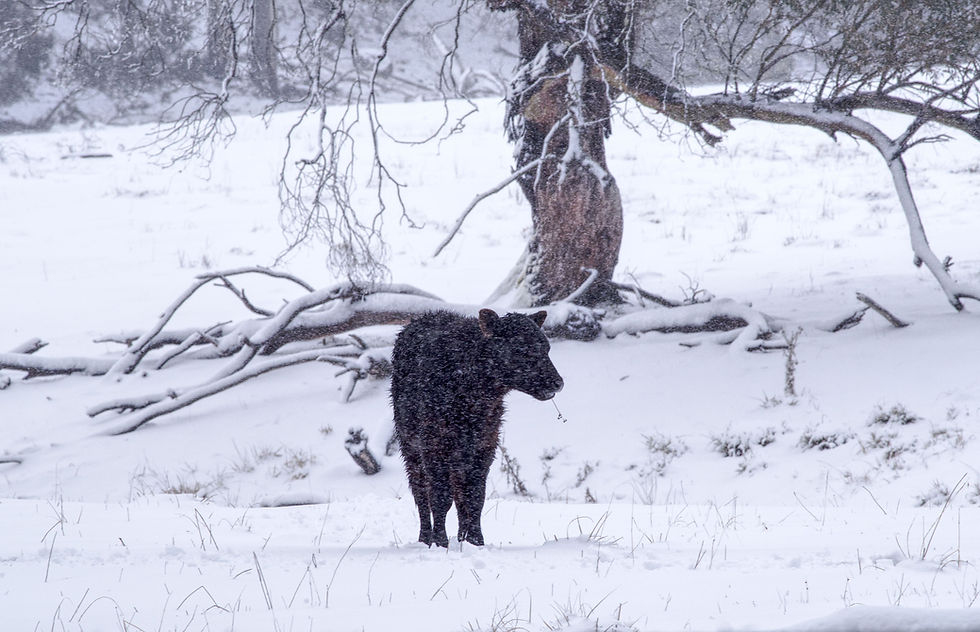
I never imagined we were experiencing a disaster event until the evening news. Forty kilometres upstream, the weight of the snow had shifted the earth and caused a great, heaving landslide. The grazing cows, already confused, tumbled into icy water and drifted, scrabbling and afraid, nothing to grip and nobody to help.
Farmers lamented their lost crops, just weeks off harvest. Years, decades of care and progress decimated. Beloved animals washed away, or frozen in their yards. I was glad Dad wasn’t here to see it. I turned the TV off.
The power flickered out as evening settled. I had candles already arranged, soup already bubbling upon the stove, phone all charged. The snow had been gathering neatly atop the powerlines all afternoon. I’d watched their progress, waiting.
The world felt so tiny. The powerlines were dangling, and nobody was on their way to reconnect them. Everyone for themselves, with the roads blocked by broken branches and fallen trees, the snow barricading every route. On the air hung a feeling that precedence was dead.
In the last of the evening light, I returned to the deck. I’d once expected disaster to strike all at once. A big blip and then nothing. Watching the snow fall, still mystified by it, I understood that it would be slow and gradual. Disaster would still appear on the news, but we’d also watch it from the front step.
I gazed down upon the river. Waited for the cows to bob past. I thought maybe I’d somehow rescue them. Against odds. Bring them inside. Wrap them up in towels and sit them on the hearth. Feed them soup. Tuck them into bed beside me.
The snow muffled thunder overhead—a constant, rolling rumble. Wood cracked, splintered, and scattered. The snow was a stalking creature with thick fur. I heard it—its low growl, and the clicking and cracking of sharpening of claws.
Despite the cold, and the fear, I didn’t want to return indoors. Not when outside was so beautiful.
Niamh Wood is a writer and editor based in Meanjin Brisbane. Niamh's work has been published with Island Magazine, Fictive Dream, Voiceworks, and others. She is Assistant Publisher and Editor at Jacaranda Journal and holds a PhD in Creative Writing. Find Niamh on Instagram @niamhwood12


